
Dental chews are edible treats engineered to slow plaque and tartar buildup through mechanical abrasion while a dog chews, and they have become one of the fastest-moving subcategories in oral care. The demand is easy to explain: veterinary sources estimate that over 80% of dogs over the age of three have active dental disease, while daily tooth brushing — the gold standard — is the habit most owners never build. This guide covers how a dental chew actually works, what the VOHC seal certifies and what it does not, the hardness rule that prevents fractured teeth, the safety copy your packaging needs, and the seven checks worth running before a wholesale order.
Why dental chews earn their shelf space
Dental disease is the most common condition veterinarians see, and it hides in plain sight. VCA’s dental disease guidance reports that more than 80% of dogs over three show active disease and that most dogs never display obvious signs — the owner finds out at an annual cleaning, when the bill and the extractions arrive together. Small breeds and short-nosed dogs are the worst affected because crowded teeth trap more debris.
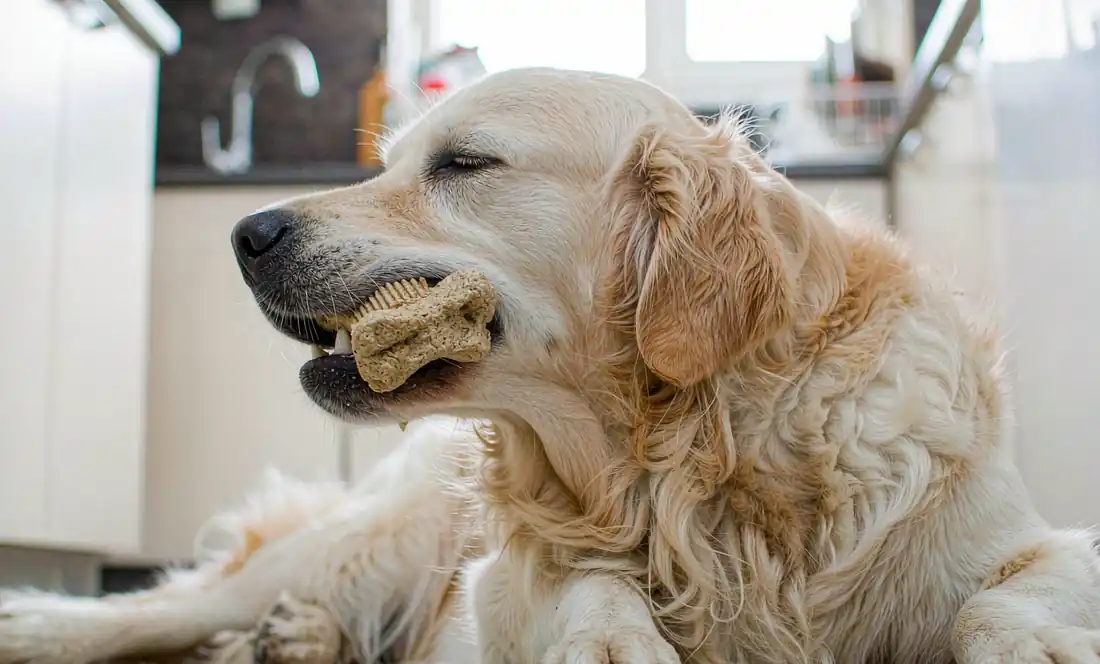
Against that backdrop, a chew that measurably slows buildup is an easy sell. VCA is careful with the wording — special chews and treats “may help reduce or delay” plaque and tartar — and that restraint is worth copying in your own listing copy. Chews supplement brushing; they never replace it. Retailers who phrase the claim that way build fewer returns and fewer disappointed reviews than retailers who imply the chew substitutes for a professional cleaning, and the phrasing costs nothing.
How dental chews work — and what the VOHC seal certifies
The mechanism is mechanical, not chemical. Plaque is a bacterial film that forms on teeth every day; if it is not removed within about 48 hours it begins to harden into tartar, which can no longer be brushed away and must be scraped off under anesthesia — a point VCA Canada makes in its toothbrushing guidance. A chew works by scrubbing that film off as the teeth sink into a fibrous, ridged material. Ridged surfaces, deep grooves and a texture the teeth must press through do most of the work; enzymes or additives are secondary at best.
The industry’s only independent benchmark is the VOHC accepted products list, maintained by the Veterinary Oral Health Council. The council does not run tests itself — it reviews trial data submitted by manufacturers and awards a seal for plaque control, tartar control, or both. That distinction matters commercially: a chew bearing the VOHC seal carries a verified claim, while an unverified chew that says “fights tartar” carries marketing. Retail buyers increasingly check the list before writing orders, and “VOHC seal awarded” is a line item that belongs in your product data sheet if the formula qualifies.
What the seal does not certify is equally worth stating: it says nothing about ingredients, digestibility, calories, or whether the dog finds the chew palatable. Those remain your sourcing checks, not the council’s.
Dental chew design specs buyers should verify
Two chews can look identical in a listing photo and perform completely differently in a mouth. The difference lives in a handful of specifications, and each one can be written into a purchase order as a requirement rather than a hope.
Texture and geometry. Ridges, grooves and a fibrous cross-section multiply the scrubbing surface. A smooth extruded stick mostly gets gummed; a ridged one makes the teeth work. Ask the supplier which mold or extrusion profile the formula was trialed with, because the geometry is part of the claim.
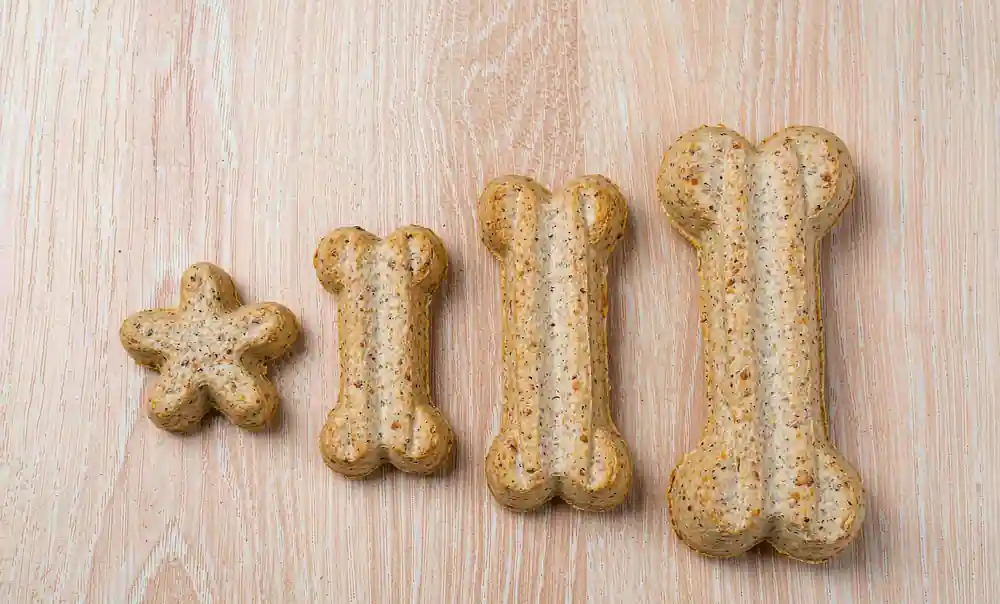
Size grading by weight band. A chew sized for a ten-kilogram terrier is a swallow hazard for the terrier and a five-second snack for a retriever. Grade the range into at least four weight bands — mini through large — and put the bands on the pack, not just on the carton. The VOHC program itself names right-sizing as one of the two ways obstruction incidents are reduced, so the grading is a safety feature, not merchandising.
Ingredient declaration and digestibility. Edible chews are swallowed, so the ingredient list needs a full declaration with no vague “meat derivatives” buckets, and the base — starch, plant fiber, collagen or rawhide — should match the digestibility claim. Plant-based starch formulas suit dogs with protein sensitivities; collagen-based sticks market on joint-adjacent ingredients; rawhide carries the longest digestion caveat and needs the clearest supervision copy.
Calorie load. Most brands position a dental chew as a daily treat, and a daily treat lands inside the “treats under 10% of daily calories” rule veterinarians repeat. Print the calorie count per chew and the suggested frequency together, so an owner can do the arithmetic without leaving the shelf.
Formulation formats: starch, collagen and rawhide
Three base materials dominate edible oral-care treats, and each carries a different safety, margin and merchandising story. Starch-based formulas — potato, corn or tapioca starch bound with plant fiber — are the modern default: fully plant-based, gentle on protein sensitivities, and extrudable into the ridged shapes that do the scrubbing. Collagen-based sticks position on the ingredient itself, borrowing margin from the joint-supplement aisle, and they chew down slower than starch, which extends the brushing session per unit. Rawhide remains the traditional base, still earns seals in several accepted formulations, and trades the cleanest ingredient story for the strongest digestion caveats.

The choice shapes the range more than the shape does. Starch formulas suit retailers serving allergy-conscious households and reorder fastest because they are consumed quickest; collagen suits premium shelves and gift-end caps; rawhide suits value shelves where the supervision insert does the safety work. Many successful ranges stock all three at different price points rather than arguing between them — the buyer’s dog decides, and the routine story on the packaging stays identical across the formats.
The hardness rule: a chew that bends before it breaks
Hardness is the spec that separates a dental product from a dental emergency. Most fractured teeth in dogs come from chewing objects that are too hard — VCA names ice cubes, bones, hard nylon chews, antlers and hooves as the recurring offenders, and sets a simple standard: any chew toy or dental treat fed to a dog should bend and “give” upon compression. A tooth that meets something harder than itself cracks, and a cracked carnassial means a root canal or an extraction.
The shop-floor version of the standard is the thumbnail test: press your thumbnail into the chew, and it should leave a visible dent. If the surface resists a thumbnail, it can resist a molar. Buyers should run this test on every sample, and brands should write the bend requirement into the product specification — a fracture claim is the most expensive failure mode in the category, and it is almost entirely preventable at the formulation stage.
Beware the borderline products this rule disqualifies. Antler “dental” chews and hardened nylon brushes-shaped-like-treats still appear in catalogues, and some carry tartar claims. They fail the bend test by design, and stocking them puts the fracture risk in your margin.
Safety copy that belongs on the packaging
Oral-care treats are swallowed products with a documented obstruction risk, so the packaging carries duties that accessory packaging does not. The VOHC safety guidance names two ways obstruction incidents are significantly reduced: ensure the chew is the right size for the dog’s body weight, and limit giving it to times when the owner is available to observe. Both belong on the pack in plain language, not buried in a website FAQ.

The rest of the insert writes itself from the same logic: pick the weight band by the size table, not by eye; retire the chew once it is small enough to swallow whole; bin any piece that breaks into hard fragments; and keep fresh water available, because fibrous chews are thirsty work. Supervised chewing is part of the product, not fine print — and in our own packaging runs, the supervision and size-table copy is printed on the insert by default rather than sold as an upgrade, because the alternative is a return rate and a liability you do not want.
Where dental chews sit in an accessories range
Oral care rewards the whole category, not just one SKU, and the pairing logic is worth explaining to retail buyers because it lifts adjacent lines. The natural anchor pair is chew plus brush: a dental chew handles the days brushing does not happen, and a proper toothbrush range handles the rest — retailers who merchandise the two together frame the shelf as a routine rather than a choice, which is exactly how veterinarians describe it. The cat side mirrors the logic with feline oral treats and a cat toothbrush set, and feline ranges convert on the same routine story.
Beyond oral care, the chew shares a shelf behavior with enrichment feeding — a lick mat guide covers the other half of the “occupy the dog calmly” brief, and buyers who bundle a chew, a mat and a feeder into a calm-behavior end cap tend to move all three. Chews are also a genuine repeat-purchase product: consumption, not fashion, sets the reorder clock, so a customer who buys once returns monthly without any seasonal push.
For range planning purposes that makes oral care a retention line, and retention lines justify deeper size curves and more packaging investment than seasonal accessories do. The wholesale economics follow the same logic — stock configurations ship in three to seven days so the monthly reorder actually arrives between two deliveries of the same customer, and custom flavors or band splits run seven to thirty days after sample approval.
Sourcing checklist: 7 things to confirm before ordering
Everything above collapses into seven questions, and a supplier who volunteers most of them unprompted is telling you something about their QC culture.
- Efficacy claim and seal status. Whether the formula carries a VOHC seal, for plaque or tartar, and the trial reference behind it. “Cleans teeth” as a bare claim is marketing; a seal citation is a specification.
- Hardness evidence. The bend test run on a production sample — visible thumbnail dent, no brittleness at the ridges. Ask whether hardness is measured and recorded per batch or assumed from the recipe.
- Size curve by weight band. At least four bands with the weight ranges printed, and mixed-band packing in one order. Full-carton-per-size ordering is common industry practice; our own minimums flex per band so a mixed split is the default, and stock configurations ship in three to seven days while custom formulas run seven to thirty days after sample approval.
- Ingredient declaration. Every ingredient named, no generic derivative buckets, and the base material matched to the digestibility story on the pack.
- Calorie and frequency data. Calories per chew, suggested frequency, and the two printed together so the daily-treat arithmetic works at the shelf.
- Safety insert. Weight-band table, supervision wording and the retire-when-small rule, printed rather than optional. Packaging that teaches safe use sells the next unit of the range, not just this one.
- Sample and shelf-life terms. A production-grade sample before the order, batch dates on the carton, and a written shelf-life figure that matches your sell-through rate — edible products punish slow turns more than any accessory does.
A chew range that clears all seven is a product the buyer can defend with paperwork, and paperwork is what separates a category anchor from a liability.
One margin note closes the analysis. Oral-care treats price like consumables, not accessories: the unit margin looks thin beside a collar or a toy, but the reorder clock runs on consumption, so the annual margin per customer compounds in a way seasonal gear never does. Buyers evaluating the category on unit margin alone systematically underweight it; buyers evaluating on repeat rate build the deepest size curves and the strongest packaging, which is exactly the pattern the checklist above rewards.
Frequently asked questions
Do dental chews replace tooth brushing?
No. Brushing is the gold standard — VCA calls daily brushing the best way to remove plaque, and nothing a chew does matches a brush on the gum line. Chews cover the days brushing does not happen, which in practice is most days for most households. Packaging that says both things honestly out-converts packaging that implies a replacement.
How do I know a dental chew actually works?
Look for a VOHC seal, which is awarded only after the council reviews submitted trial data for plaque or tartar reduction. The current accepted list is published at vohc.org and covers chews, diets, additives and brushes. An unverified chew can still scrub, but its claim is marketing, and retail buyers increasingly treat the seal as the line between the two.
Can puppies have dental chews?
Most ranges grade a puppy line into the smallest weight band with a softer formula, and puppy-specific products exist precisely because milk teeth and adult teeth differ in bite force. Follow the age and weight wording on the pack rather than improvising, and keep the supervision rule unchanged — puppies swallow, which makes right-sizing the single most important check at that age.
How many calories does a daily dental chew add?
It varies by size band, typically from under thirty calories for a mini chew to a hundred or more for large breeds, which is why the count belongs on the pack next to the frequency suggestion. The veterinary rule of thumb keeps treats under about ten percent of daily calories, so large-dog chews may need a food-portion adjustment — another line the insert can carry for free.
What size dental chew should a retailer recommend?
By weight band, never by eye. The right chew is one the dog cannot swallow whole and must actually work through — the VOHC names correct sizing as a primary way obstruction is prevented. If a customer is between bands, the safer recommendation is the larger chew with supervision, not the smaller one without.
Are rawhide-based dental chews safe?
Rawhide earns a VOHC tartar seal in several formulations, so efficacy is not the issue; digestibility and supervision are. Rawhide swells when wet, digests slowly, and carries the strongest case for the observe-while-chewing rule and the retire-when-small rule. Starch-based and collagen-based alternatives trade some of that caveat away, which is why many retailers stock both and let the safety insert guide the choice.
How often should a dog get a dental chew?
Daily is the positioning most accepted products carry, because plaque re-forms every day and the 48-hour hardening window never pauses. The honest framing for packaging is “daily where the calorie budget allows, several times a week at minimum” — frequency with a boundary, not a promise of results from occasional use.
Do dental chews help with bad breath?
Indirectly, yes — most breath odor traces back to the bacteria in plaque, so a chew that slows film buildup also slows the odor, and owners usually notice the difference within a week or two of daily use. The honest boundary belongs in the copy all the same: persistent strong odor is a symptom of dental disease that needs a veterinary exam, not a stronger treat, and packaging that says so protects the claim instead of overreaching it.
Related reading
the dog toothbrush range, the cat toothbrush range, the lick mat guide and the wholesale pet supplies hub