





















Cuteeye Pet is a China-based pet products manufacturer and B2B supplier, offering a broad range of wholesale dog products for pet stores, e-commerce sellers, distributors and private-label brands. Our catalog covers comfort, feeding, walking, training, grooming, health, bath time, play and seasonal items — from dog beds and dog collars to grooming tools, bath tubs and toys. Every product supports OEM/ODM customization with factory-direct pricing.
What Is in Our Wholesale Dog Catalog
Comfort & Warmth
Dog beds, dog house heaters and heat lamps for cold-season lines.
Feeding & Hydration
Dog feeders and travel water bottles for everyday use.
Walking & Training
Collars, harnesses, muzzles, ID tags and chain necklaces.
Grooming, Health & Bath
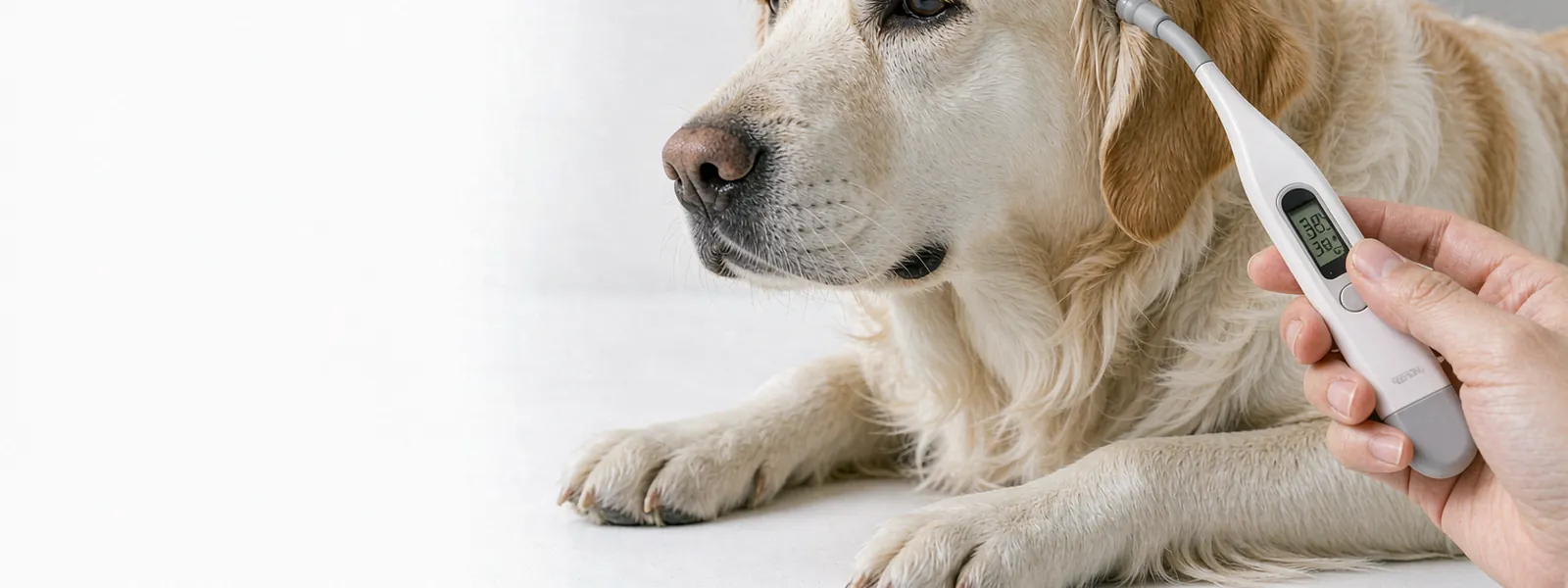
Grooming tools, toothbrushes in bulk, thermometers, nappies, recovery cones and foldable bath tubs.
Play & Enrichment
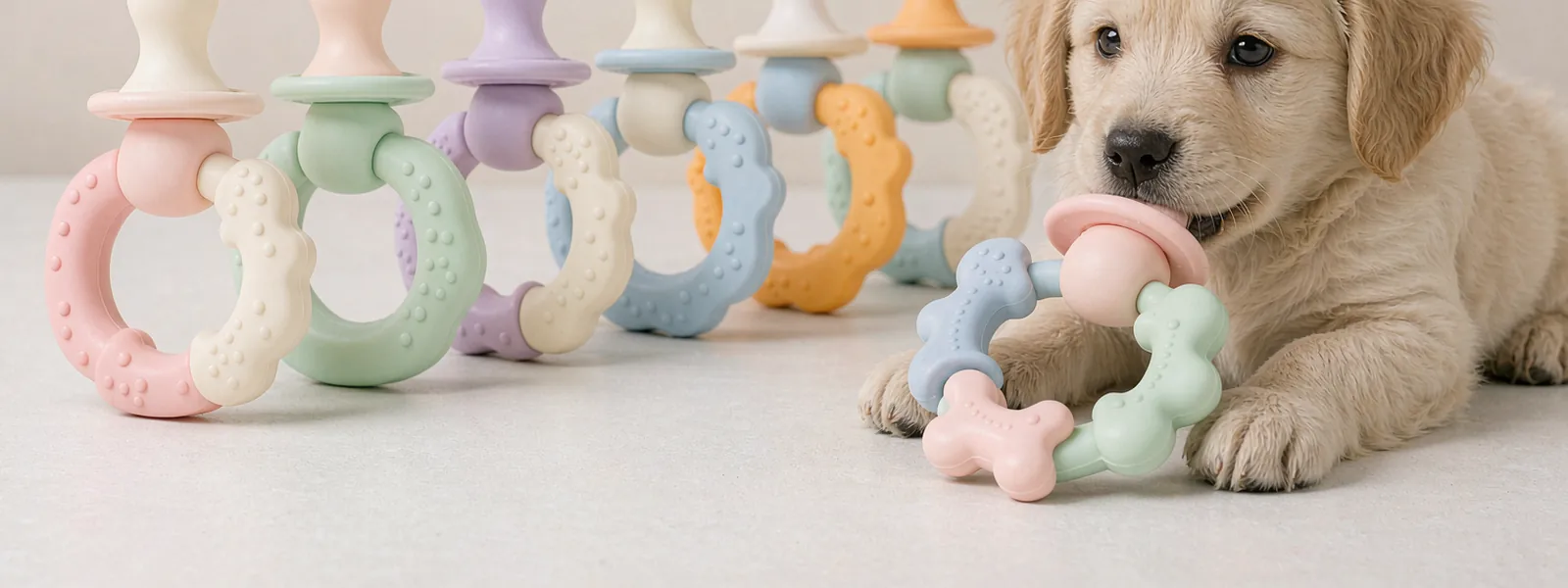
Dog toys, teething toys and pacifier toys for puppies.

OEM, ODM & Private Label Dog Products
We support private-label programs across the catalog, so you can launch dog products under your own brand. Customization covers branding, materials, packaging and barcoding — with sample support before you commit to production.
- Logo printing, embossing and custom branding on products and packaging
- Custom colors, materials and sizes to match your market preferences
- Retail-ready packaging, inserts and barcoding
- Safety-led silicone production for toys and teething items, made in our own molding facilities
- Extended categories (beds, collars, harnesses, carriers, smart devices) produced with our partner factory network
Why Retailers Choose Cuteeye
Factory-Direct Pricing
A Huizhou-based manufacturer combining in-house silicone production with integrated trading services — no middlemen in the chain.
Low, Flexible MOQs
Catalog items can be mixed in one order, which makes entering a new market affordable and low-risk.
Fast Dispatch
In-stock items ship within 3–7 days; custom production typically runs 7–30 days depending on complexity.
Consistent Quality
Documented production processes and quality-control checks before shipment keep quality stable order after order.
Wholesale Dog Products FAQ
What is the minimum order quantity for wholesale dog products?
MOQs vary by product and level of customization. Ready-to-ship catalog items support low minimums and can be mixed with other products in a single order, while fully customized designs require higher quantities. Send us your product list and our B2B team will confirm the exact MOQ for each item.
Do you support private label and custom branding for dog products?
Yes. Our OEM/ODM services cover logo printing, custom colors, material selection, packaging design and barcoding, so you can sell our dog products under your own brand.
Can I mix different dog products in one order?
Yes — mixed orders are welcome. Combining multiple SKUs is a practical way to reach efficient shipping volumes while testing a broader assortment in your market.
What is the lead time for dog product orders?
In-stock items ship within 3–7 days. Custom and bulk production typically takes 7–30 days, depending on the product, quantity and level of customization.
Can I get samples before placing a bulk order?
Yes. Samples are available so you can check quality, materials and finishing before committing to production. Tell us which products you are evaluating and we will arrange them.
Do you ship dog products worldwide?
We ship to pet stores, e-commerce sellers and distributors worldwide by sea, air and express courier, and we support both small first orders and repeat container programs.
Ready to build or expand your dog product line?
Send us your target products and market, and we will reply with the full catalog, item-specific quotes and customization options.
Choosing Wholesale Dog Products by Buyer Type
Dog is the largest category in the pet trade, which also makes it the easiest to over-buy. The ranges below are the ones our customers reorder most, grouped by the buyer rather than by the product — because what works for a suburban pet shop rarely suits an online brand.
For pet shops and regional chains
Shelf-space economics reward breadth and predictable restocking. Start with consumable-adjacent categories that customers return for: collars and ID tags, which are replaced rather than kept, and grooming tools, where brushes and combs wear out. Add one or two destination categories — typically beds — to anchor the section.
For online sellers and marketplace brands
differentiation matters more than breadth because a new listing competing on price against an established one rarely wins. Look at ranges where the product is already good but the branding is generic: toys with private label packaging, feeders in custom colours, puppy teething toys sold as sets. These photograph well and hold margin.
For distributors and private label programmes
Continuity is the requirement. Harnesses in standard size runs, chain collars and recovery cones are specification-driven products where the same item must be available again next season.
Sizing, Chew Strength and Compliance: The Three Specifications That Matter
Across the dog range, three specification errors account for most returns and most complaints. None of them are about colour.
Sizing. A harness sold by weight alone will not fit reliably — chest girth matters more, particularly for deep-chested breeds. Ask for a full measurement chart rather than a small/medium/large split, and check whether the size run covers the breeds common in your market.
Chew strength. Toys are graded by durability, and “tough” is not a grade. Matching a toy’s construction to the dog’s bite strength prevents both refunds and, in the worst case, injury claims. See how we classify it on the dog toys page.
Compliance documentation. Where your market requires it, ask what exists today rather than what could be produced. Textile components commonly reference OEKO-TEX standards; plastics and coated metals may need REACH-related documentation.
Practical Notes on Ordering
In-stock items ship within three to seven days. Custom production runs seven to thirty days depending on the product and quantity. Minimums are low and cartons can be mixed across categories, so a first order can cover several lines without each carrying a separate minimum.
Freight deserves particular attention for bulky lines. Beds and bath tubs are priced by volume rather than weight on most freight quotes, which means a cheap unit price can land expensive. Consolidating categories into one shipment spreads that cost across more units. Our pet supplies wholesale guide works through the landed-cost arithmetic in full.
Send us your product list and quantities and we will quote against your actual mix rather than a catalogue rate.
The Nine Wholesale Dog Products Groups, Compared by Economics
A catalogue tells you what a supplier sells. It does not tell you which lines will carry the freight, which will come back, and which will sit. The nine groups below are the same groups listed earlier in this page, resorted by how they behave once you own them.
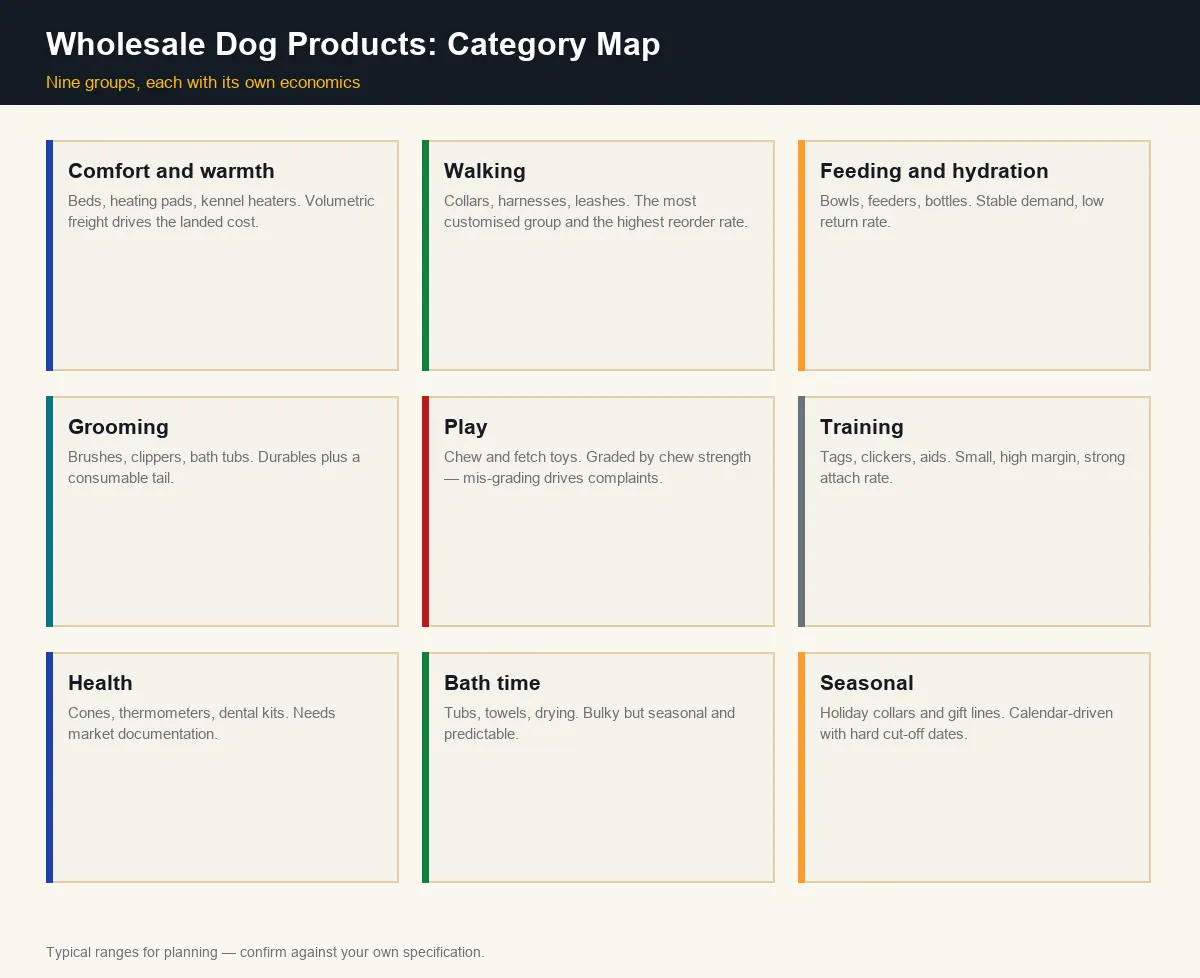
Comfort and warmth. Beds, heating pads and kennel heaters. The best margin per unit in the range and the worst margin after freight, because carriers charge on volume rather than weight.
Walking. Collars, harnesses, leashes and muzzles. The most customised group, the strongest reorder rate, and the one where private label adds the most perceived value.
Feeding and hydration. Bowls, feeders and travel bottles. Transparent pricing and weak differentiation, but dependable year-round demand and almost no returns.
Grooming. Brushes, clippers and bath equipment. Durables acquire the customer and consumables hold them, which makes this the best group for building repeat volume.
Play. Chew and fetch toys. Graded by chew strength, and mis-grading is the single largest source of complaints in wholesale dog products.
Training and ID. Tags, clickers and training aids. Small, light, high margin, and the strongest attach rate to any other purchase.
Health. Cones, thermometers and dental kits. Needs market documentation, and rewards a supplier that knows your destination.
Bath time. Tubs, towels and drying aids. Bulky but seasonal, which makes demand unusually predictable.
Specialty and seasonal. Wheelchairs, holiday collars and novelty lines. Calendar-driven with hard cut-off dates — miss the production window and the season is gone.
Where Margin Sits Across Wholesale Dog Products
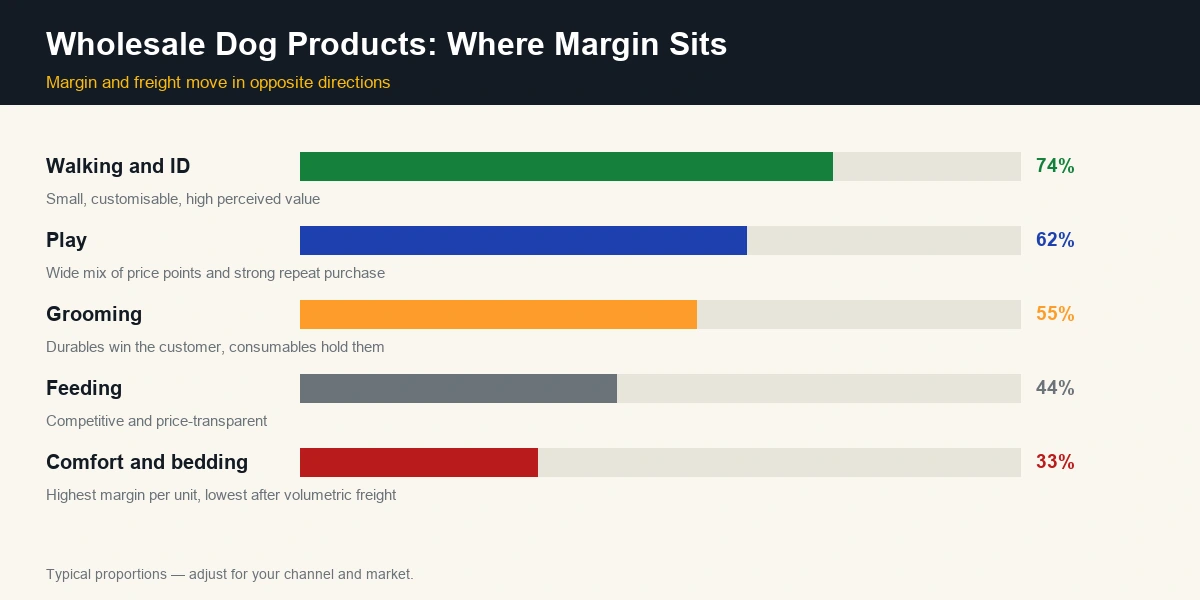
Margin per unit and margin after freight are two different numbers, and the gap between them is widest in wholesale dog products of any category we sell.
Walking and ID lines sit at the top. They are small, light, customisable and carry far more perceived value than material cost — a printed collar with your brand reads as a product, not a commodity.
Play sits next: a wide spread of price points, strong repeat purchase, and enough differentiation to avoid direct unit-price comparison.
Grooming follows, because the consumable tail compensates for a competitive durable market. Feeding is transparent and price-competitive. Comfort and bedding has the highest ticket and the lowest landed margin, because a compressed bed is mostly air and air is what you pay to ship.
How to Structure a First Wholesale Dog Products Order

The most common first-order mistake is shallow coverage: three units of everything, which gives you no depth to sell from and no data to reorder on.
A better structure has three parts. Choose one anchor line you can describe in a single sentence, and go deep enough in it to look like a range. Add two or three adjacent items that attach naturally to the anchor. Then add one test SKU at the smallest viable quantity — something genuinely new to you, which is how a catalogue learns what its customers want.
Keep the size split uneven. Matching the size curve to your market rather than to a neat grid is the difference between selling out and warehousing the extremes.
Freight: The Number Buyers Underestimate
Volumetric weight is why a cheap product can arrive expensive. Carriers bill on the larger of actual and volumetric weight, so a light, bulky item is charged as though it weighed what it displaced.
This is easiest to see on wholesale dog beds, where freight frequently exceeds the ex-works unit price. It is almost irrelevant on dog tags and dental kits, which is precisely why those lines look so attractive per cubic metre.
Ask for carton dimensions before you ask for a discount. A five per cent price reduction on a bulky line is worth less than a carton that packs twenty per cent tighter.
Compliance, Labelling and Documentation
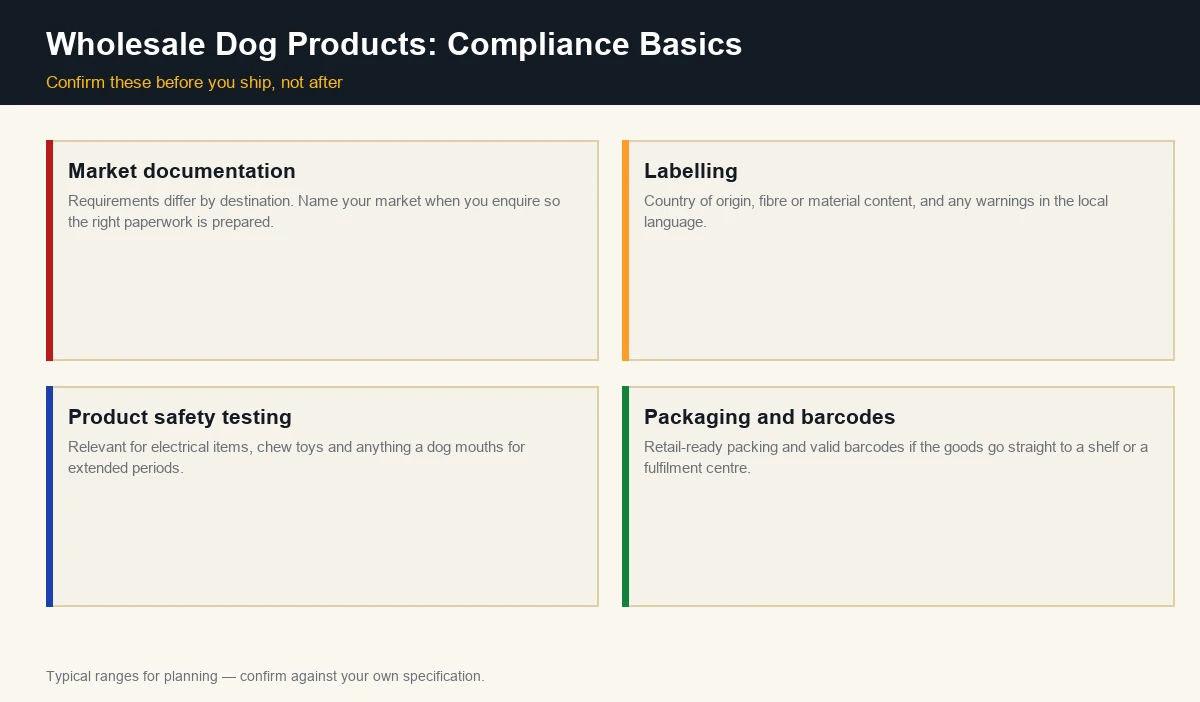
Requirements differ by destination market, so name your market in the first email. It decides which documentation we prepare and which testing route applies.
Labelling typically covers country of origin, material or fibre content, and any warnings in the local language. Product safety testing is relevant for electrical items such as kennel heaters, and for anything a dog mouths for extended periods — teething toys are the obvious case.
If the goods go straight to a retail shelf or a fulfilment centre, confirm retail-ready packing and valid barcodes at specification stage. Retrofitting barcodes after production is the most avoidable cost in wholesale dog products.
What Reorders Actually Look Like
Second orders look nothing like first orders. Buyers who start with a broad spread reorder a narrow one: the two or three SKUs that sold, at multiples of the original quantity, plus one new test item.
Lead time matters more on the second order than the first, because by then you are filling a gap rather than opening a range. Stock items dispatch in three to seven days; custom production generally runs seven to thirty days. Planning a reorder on the stock-side timeline while specifying a custom item is the most common scheduling error we see.
If you want the wider commercial picture — sourcing routes compared, landed cost built up line by line, and what a first order should cost — start with our pet supplies wholesale guide, or see how we handle wholesale dog collars as a worked example.
Mistakes Repeated in Wholesale Dog Products Orders
Four errors account for most first orders that disappoint. None of them are dramatic, and all of them are avoidable at specification stage.
Ordering the full size curve evenly. Demand is never evenly distributed. An even split leaves you overstocked at both ends and short in the middle, which is where reorder pressure appears first.
Specifying by weight rather than by measurement. Weight is customer shorthand, not a grading basis. Two dogs of identical weight can need different harness sizes, and a chart built on weight alone generates returns.
Comparing unit prices across different specifications. A quote that looks cheaper is frequently a thinner material, a lighter fill or a simpler fastening. Compare specifications, then compare prices.
Leaving packaging until the end. Barcodes, inserts and retail-ready packing decided after production are the most avoidable cost in wholesale dog products, and the most common cause of a delayed launch.
Seasonality and When to Order
Dog lines are steadier than cat lines, but three predictable peaks still shape the calendar: cold-season comfort, holiday gifting, and the spring grooming surge.
Comfort and warmth builds from late autumn. Kennel heaters and beds need production slots reserved well ahead of the season, because freight time has to fit inside a fixed selling window.
Seasonal items such as Christmas collars have hard cut-off dates. Miss the production window and the inventory is unsellable until next year, which is why we ask about target landing dates early.
Grooming builds through spring as shedding season starts. If you sell grooming tools, that is the quarter when depth matters more than range.