
Cooling mats are passive surfaces that draw heat out of a resting dog — no electricity, no compressor, and increasingly no summer season without them. The medical context explains the demand: VCA treats anything above 103°F (39.4°C) as abnormal body temperature and heat stroke develops past 106°F (41.1°C), and dogs cannot sweat the way people do to get there. This guide covers how a cooling mat fits into that picture, the six types on the market and what each actually does, the specs that separate a safe product from a chew hazard, the placement and supervision rules that make them work, and the seven checks worth running before a wholesale order.
Why dogs overheat — and where a cooling mat helps
A dog’s cooling system is crude. Dogs release heat mainly by panting, with a small assist from sweat glands in the paw pads — VCA’s heat stroke guidance explains that panting is the primary mechanism and that flat-faced breeds, whose airways restrict it, can show heat stroke signs in only moderately warm conditions. Body temperature above 103°F (39.4°C) counts as abnormal; above roughly 106°F (41.1°C), environmental heat is the usual cause.
The upper end of that scale is the reason the category exists. Multi-organ failure begins around 107–109°F (41.2–42.7°C), and AKC’s own heatstroke resource puts the danger line at 105.8°F, noting the condition can develop in minutes in hot, humid or confined spaces. A product that keeps a resting body from climbing that curve is prevention at its most literal.

Against that backdrop, a mat is a low-effort resting surface that conducts heat away while the dog lies still — the part of the day when panting does least work. The honest framing, which your packaging should copy, is that a mat is one layer of a stack: shade or air conditioning first, water always, and the mat as the surface that makes the cool spot comfortable enough to actually use. AKC’s summer guidance puts it the same way — shade and staying indoors do the heavy lifting, and cooling supplies including mats and damp towels help the dog release heat through contact.
Cooling mats types compared: what each one actually does
Six designs dominate the market, and they solve the problem in three different ways — conduction, evaporation and airflow. Knowing which is which matters more than the marketing labels, because the types suit different climates, price points and risk profiles.
| Type | How it cools | Power | Best suited to |
|---|---|---|---|
| Gel / self-cooling | Pressure-activated gel absorbs body heat, recharges in cool air | None | Indoor resting spots, travel, most price-sensitive ranges |
| Phase-change core | Sealed PCM pack melts at a set temperature, resets in fridge or cool room | None | Premium lines, stable indoor temperatures |
| Evaporative | Soaked in water; evaporation draws heat through the fabric | None | Dry climates, outdoor use |
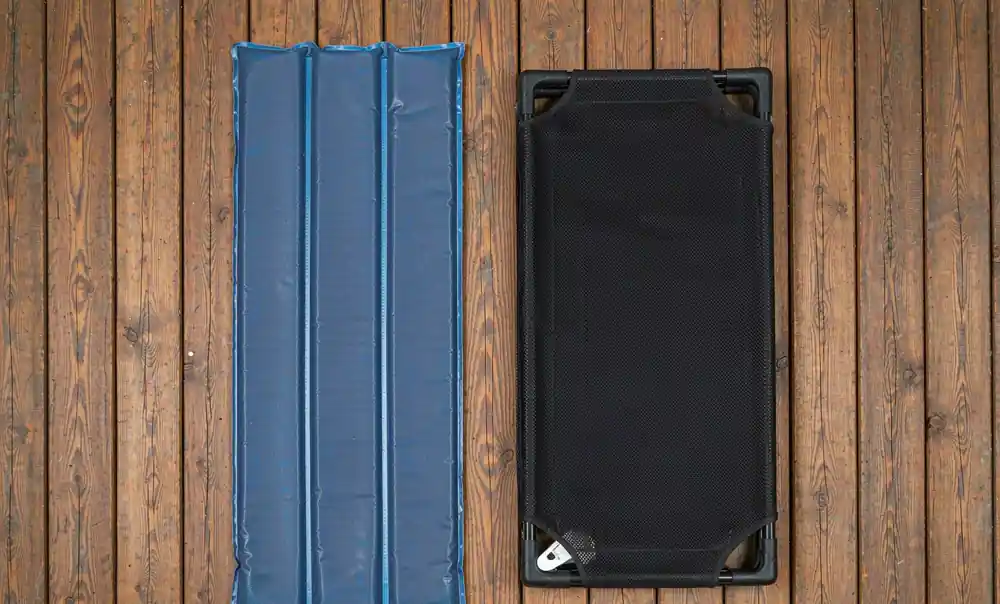
| Elevated mesh bed | Body off the floor; air moves underneath | None | Ventilated patios, crate liners |
| Freezable gel | Same gel family, chilled in a fridge before use | None | Short sessions, hot snaps — never freeze solid |
| Electric / thermolectric | Powered surface holds a set cool point | Mains or USB | Indoor premium niche, not a wholesale volume play |
For most wholesale assortments, gel and elevated designs carry the volume: both need no preparation, both travel well, and both survive a price ladder from budget to premium without changing the underlying product story. Evaporative mats sell hard in dry heat and disappoint in humidity, a boundary worth printing on the pack rather than discovering in reviews. Powered designs sit outside the usual B2B accessory model — certification, mains safety and warranty overheads put them closer to an appliance category than an accessory one.
Cooling mat specs that decide performance and safety
Two mats can look identical in a listing photo and behave completely differently in a home. The difference lives in a handful of specifications, and each one can be written into a purchase order as a requirement rather than a hope.
Gel composition and containment. The gel pack is the product’s risk center: it should be a non-toxic formulation, sealed in a puncture-resistant bladder, and the declaration should say so in writing. Ask for the gel’s safety data sheet — “non-toxic gel” as a bare claim is marketing, a document is a specification. A dog that chews through an undeclared bladder is the category’s worst failure mode, and it is preventable at the sourcing stage.
Chew-resistant construction. Reinforced seams, a ripstop outer layer and a zipper without an exposed pull tab all raise the bar against determined teeth. No passive mat is truly chew-proof, so the packaging needs the honesty clause too: supervise a known chewer, and retire a mat once the bladder is exposed.
Size and weight rating. A dog must fit on the surface, not just near it — grade the range into at least three sizes matched to weight bands, and print the band on the pack. An undersized mat teaches the owner that the product failed when the product was simply too small.
Cover fabric and cleaning. A removable, machine-washable cover is the feature owners rate after the first hot month, because gel surfaces collect fur and drool. Look for a washable cover over a wipe-clean bladder, and confirm the fabric is skin-safe — a mat is a contact surface for hours at a time.
Portability and storage. Lightweight gel mats roll or fold for travel and crate use, which doubles the occasions a household reaches for the product. Flat-pack storage matters to retailers even more than to owners: a mat that ships rolled displays better and cuts freight per unit.
Placement and use: making the mat actually work
A cooling mat helps most where the surrounding air helps it. The International Cat Care hot-weather guidance — written for cats, but the physics hold for any pet — recommends providing cool resting spots and notes that pets gravitate to tile and porcelain because those surfaces conduct heat away; a mat simply brings that behavior to a fabric-friendly surface. Place mats in the coolest room available, out of direct sun and with airflow across the surface, and the effect doubles; place one on a sunlit patio and the gel recharges slowly and underperforms all afternoon.

Placement rules worth printing on the insert: keep fresh water within reach, because a cooling surface does not replace hydration; move the mat to shade during the hottest hours; and let the animal choose it — a mat the pet adopts on its own gets used daily, while a mat the owner forces becomes a plaything. For multi-pet households, one mat per resting spot prevents the resource guarding that turns a comfort product into a conflict.
The cat side is a genuine second market: felines seek warm-weather cool spots exactly as dogs do, and the same product merchandised with cat-sized dimensions serves the segment without a new SKU architecture. VCA’s enrichment guidance makes the broader point that indoor animals need environmental variety — a cool surface in a warm season is variety with a health angle attached, which is a strong shelf story for retailers who serve both species.
Safety limits: what a mat cannot do
Be precise in your copy, because the boundaries are where returns and liabilities live. A mat is prevention, not treatment: an overheated animal needs the emergency sequence — move to shade, cool water not ice-cold, veterinary contact — and AKC’s guidance is explicit that extremely cold water constricts blood vessels and slows heat release. Packaging that implies a mat can treat heat distress is packaging that invites a tragedy and a lawsuit; packaging that says “cooling aid, not a medical device” invites neither.
The second limit is chewing. Gel bladders and freezable packs are puncture hazards, so the supervision rule belongs on the pack next to the size table: supervise known chewers, inspect the surface weekly, and retire the product once the bladder shows. The third limit is environmental honesty — in sustained extreme heat, shade, ventilation and water do the work a mat cannot, and saying so costs nothing while out-converting copy that promises more than physics allows.
Freight, display and packaging economics
Seasonal gear lives or dies on logistics as much as on product, and mats have an unusually good logistics story when the shipping format is chosen deliberately. Gel mats roll tight and rebound flat, which cuts freight per unit sharply against rigid crate pads; elevated beds ship as a flat frame plus mesh and assemble in minutes, which keeps shelf cost low even for the large sizes. Ask suppliers for both the rolled and flat carton dimensions and the freight data per forty-foot load before comparing prices — a cheaper unit that ships bulky costs more landed than the pricier roll-packed alternative.
Display economics follow the same logic. A rolled mat stands in a wire bin or hangs on a peg with a color band; a flat mat tiles into a floor stack with the weight band printed on the visible face. Both formats restock without a shelf reset, which matters in a category where the whole end cap turns over twice a year. Packaging that prints the size band, the recharge cycle and the safety wording on the visible face carries the education at the shelf instead of relying on a store associate who may not know the category.
Where cooling mats sit in a seasonal range
Summer gear rewards the whole warm-weather end cap, and mats anchor it because they are the surface product every other item leads to. The natural basket pairs a mat with hydration and activity items: a slow feeder guide covers the hot-weather feeding pace, a paw protection guide covers the scorched-pavement half of the same season, and a grooming tools range completes the “summer coat care” story — retailers who merchandise the four together move the whole bay instead of one SKU.
Seasonality is the planning risk, and it cuts both ways. Demand spikes with the first hot week and dies with the first cool one, so order timing beats order size: stock arriving after the heat wave is stock you carry until next year.
Our own terms are built around that curve — stock configurations ship in three to seven days so a mid-season restock actually lands in season, custom colors and logo runs run seven to thirty days after sample approval, and mixed-batch ordering lets a buyer split one order across sizes and cover variants instead of committing full cartons to a single guess. The product knowledge hub collects the seasonal guides in one place for buyers building the end cap.
Sourcing checklist: 7 things to confirm before ordering
Everything above collapses into seven questions, and a supplier who volunteers most of them unprompted is telling you something about their QC culture.
- Gel safety documentation. A written safety data sheet for the gel or PCM core, non-toxic on paper and not just on the label. This is the one document that turns “safe” from a claim into a specification.
- Bladder and seam construction. Puncture-resistant bladder, reinforced seams, chew-resistant outer layer, zipper without exposed pull tabs — verified on a production sample, not a photo.
- Size curve and weight bands. At least three sizes matched to weight ranges, bands printed on the pack, and mixed sizes in one order. Full-carton-per-size ordering is common industry practice; our minimums flex per variant so the mixed split is the default.
- Cover and cleaning spec. Removable washable cover, wipe-clean bladder, skin-safe fabric declaration.
- Recharge and use instructions. How long the gel takes to reset, whether refrigeration is recommended, and the humidity boundary for evaporative types — printed, not left to the listing page.
- Packaging honesty copy. “Cooling aid, not a medical device”, the supervision rule, and the inspect-and-retire wording on the insert by default rather than as an upgrade.
- Lead time and restock terms. Stock configurations that ship in three to seven days for mid-season top-ups, custom builds at seven to thirty days after sample approval, and freight data for rolled versus flat shipping.
A mat range that clears all seven gives the buyer a defensible seasonal anchor — and a supplier who can produce the paperwork on request is a supplier whose cooling claim means something.
The category rewards buyers who plan the season in two moves rather than one: a launch order sized to the first heat wave, and a restock right committed while the selling weather still holds. That second move is where supplier lead time decides whether the season has two sales curves or one — and it is the question worth asking before the first one, not after.
Frequently asked questions
Do cooling mats actually work for dogs?
Yes, within their physics: a gel or phase-change surface conducts body heat away while the dog lies on it, which is the same reason pets seek tile floors in warm weather. The effect is strongest on contact and weakest in direct sun, so placement rules matter as much as the product. What a mat does not do is lower a fever or treat heat distress — those are veterinary situations.
Are gel cooling mats safe if a dog chews one?
The risk is the bladder, not the surface. Reputable products use a non-toxic gel sealed in a puncture-resistant layer, but any chewer can eventually breach it, so the safe-use rules are supervise known chewers, inspect weekly, and retire the mat once the bladder shows. Ask suppliers for the gel’s safety data sheet before ordering — a written declaration is the difference between a claim and a specification.
How long does a cooling mat stay cool?
Passive gel designs absorb heat for one to three hours of continuous use and then need cool air or a shaded spot to recharge, so they cycle rather than run indefinitely. Phase-change cores hold a set temperature longer but reset in a fridge or cool room. Either way the mat is a resting aid, not a refrigerator — packaging that states the cycle honestly out-converts packaging that implies all-day cooling.
Can cats use cooling mats too?
They can, and many do — cats seek cool surfaces in warm weather exactly as dogs do, and feline-specific guidance recommends providing cool resting spots around the home. The same product works for both species; the main adjustment is size, since most cats suit small and medium mats. Retailers who merchandise the product across both species turn one SKU story into two shelf placements.
Where should a cooling mat be placed in the home?
The coolest room available, out of direct sun, with airflow across the surface — and with fresh water nearby, because a cooling surface does not replace hydration. A mat in a shaded indoor spot recharges between uses; the same mat on a sunlit patio underperforms all afternoon. Let the pet choose the spot, because a mat the animal adopts on its own gets used daily.
What temperature is dangerous for dogs in summer?
VCA treats anything above 103°F (39.4°C) body temperature as abnormal, with heat stroke developing past 106°F (41.1°C) and organ failure risk from 107°F (41.2°C) upward. Flat-faced breeds, seniors and overweight dogs hit those numbers sooner. In hot weather, shade, ventilation and water come first — and an overheated dog needs cool water and a veterinarian, not ice and a mat.
Can cooling mats go in the freezer?
No — freezing a gel mat damages the bladder and turns a comfort product into a puncture risk. If a product line uses a freezable variant, the manufacturer specifies fridge chilling, never the freezer, and the difference belongs on the packaging. For everyday use, room-temperature recharge in a cool room is the default cycle.

Related reading
the slow feeder bowl guide, the paw protection guide, the grooming tools range and the product knowledge hub