
A size curve is the plan behind a well-stocked pet aisle: not one chart that claims to fit every dog, but a graded spread of bands that matches the real distribution of bodies walking through the door. Retail size charts fail at wholesale precisely because they flatten that distribution. This guide sets out one measurement protocol that works for dogs and cats alike, shows how a body measurement becomes a size band, and gives five steps to stock the curve so the reorder signal comes from demand rather than from returns.
Why one size chart fails at wholesale
A retail size chart answers a single-customer question: which of these five options fits my pet? A wholesale buyer answers a different question entirely: how many of each option should exist in the first place? The chart cannot answer that, because it shows bands without weights — the distribution of chest girths and body lengths across a customer base — and the weights are where the money is.
The flattening shows up in three familiar symptoms. The medium band sells out first while XXL sits, because pet body distributions skew medium-heavy and the chart did not. Returns cluster at the band edges, because a chart boundary drawn without an overlap zone forces every borderline pet into one band. And the “one chart fits all” promise collapses on breed-specific bodies, because a chart built on average proportions misfits the short-legged, the broad-chested and the hairless by equal margins.
The cure is to plan the assortment as a curve with weights, overlaps and known exceptions — which is what the five steps below produce. The vocabulary first, since the terms get used loosely: a measurement is what you take on the animal (girth, length, neck). A band is a range of one measurement mapped to one SKU, like “M = 51–66 cm girth”. The size curve is the full set of bands plus the planned quantity per band. Two SKUs whose bands overlap create the overlap zone where either fits; that zone is a feature, not a drafting error.
The three measurements that decide fit
Across collars, harnesses, clothing and carriers, three measurements on the animal determine fit, and a fourth acts as a sanity check:
- Neck circumference — where a collar sits. Measured at the base of the neck where a collar would rest, with the tape snug but not compressed. Not used for harnesses, which is why collar packs and harness packs need different curves.
- Chest girth — the widest point of the ribcage, taken just behind the front legs. This is the primary measurement for harnesses and garments, because the ribcage is the anchor the load or the fabric hangs on.
- Back length — from the base of the neck (where the collar sits) to the base of the tail, along the spine. Primary for clothing, irrelevant for collars.
- Body weight — not a fit measurement, but the fastest sanity check a customer can take without a tape. Use it in charts as a secondary column, never as the primary selector: two dogs of equal weight can differ by 15 cm of girth depending on build.
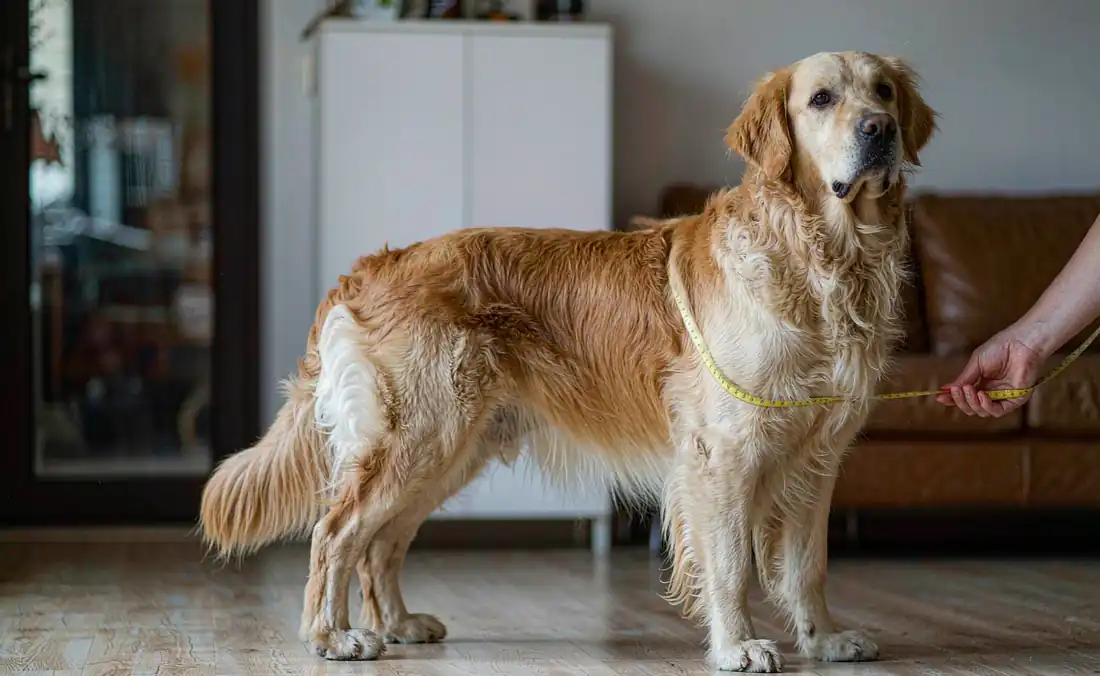
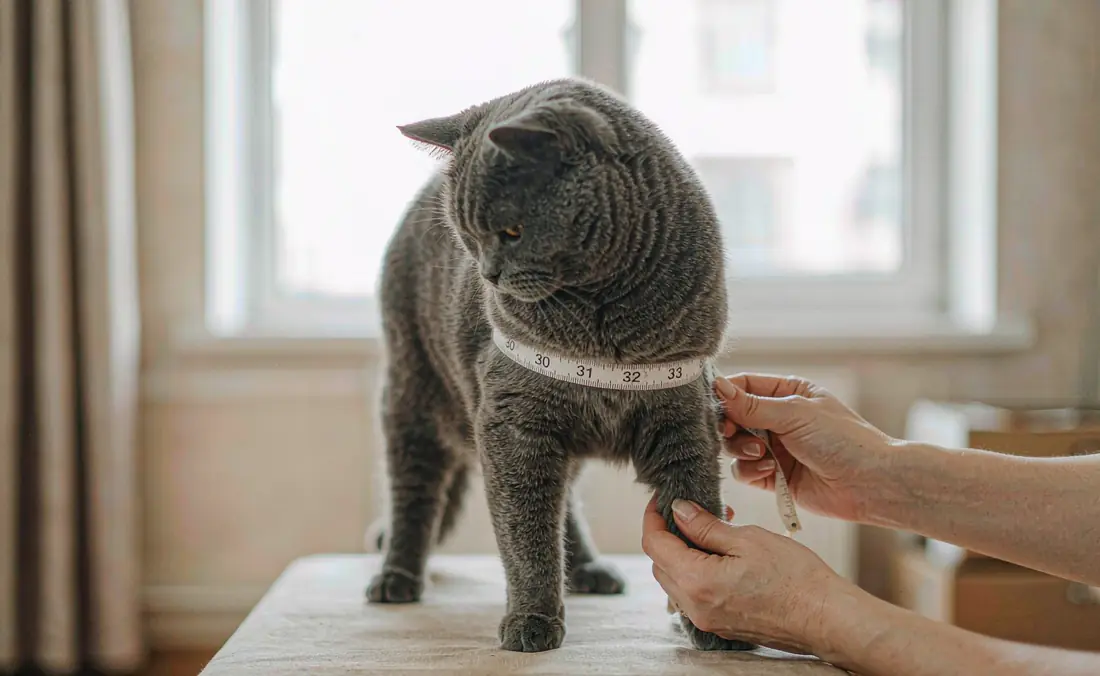
The measurement protocol matters as much as the measurement list, because charts written by one office get applied by another with a different tape technique. Fix the technique: tape parallel to the ground, compressed against a short coat and eased over a thick one, pet standing square, measurement taken twice. Fix the conditions too — measure after the pet has been standing calmly for a minute, not mid-wiggle at the door, and record which coat state the numbers were taken in, because a winter-coat measurement can differ from a summer one by enough to cross a band boundary. A protocol note printed on the chart is cheaper than the returns that follow its absence.
One protocol for dogs and cats
Dogs and cats are sized with the same three measurements and the same tape discipline, which makes a single measurement protocol usable across a mixed pet store. The differences sit below the protocol, in the numbers: cat ranges are narrower and skew smaller, cats tolerate fabric and restraint less than dogs, and the breeds that break charts differ between the species.
For dogs, the band structure in the worked table below covers the great majority of bodies from toy breeds to large ones. For cats, most adult pet cats fall in a narrow girth band around 28–38 cm with back lengths of 30–40 cm — which is why cat garment ranges often ship three bands where dog ranges ship five or six. The exceptions come from body type rather than species: the same adjustment logic applies to a stocky cat as to a stocky dog.
Two authoritative references are worth bookmarking when you build charts: the AKC breed profiles list typical heights and weights per breed for dogs, and International Cat Care publishes body-size guidance for cats. Neither substitutes for measuring the actual customer’s pet — but both help you predict which bands your local demand will pull.
From body to SKU: how a size band is built
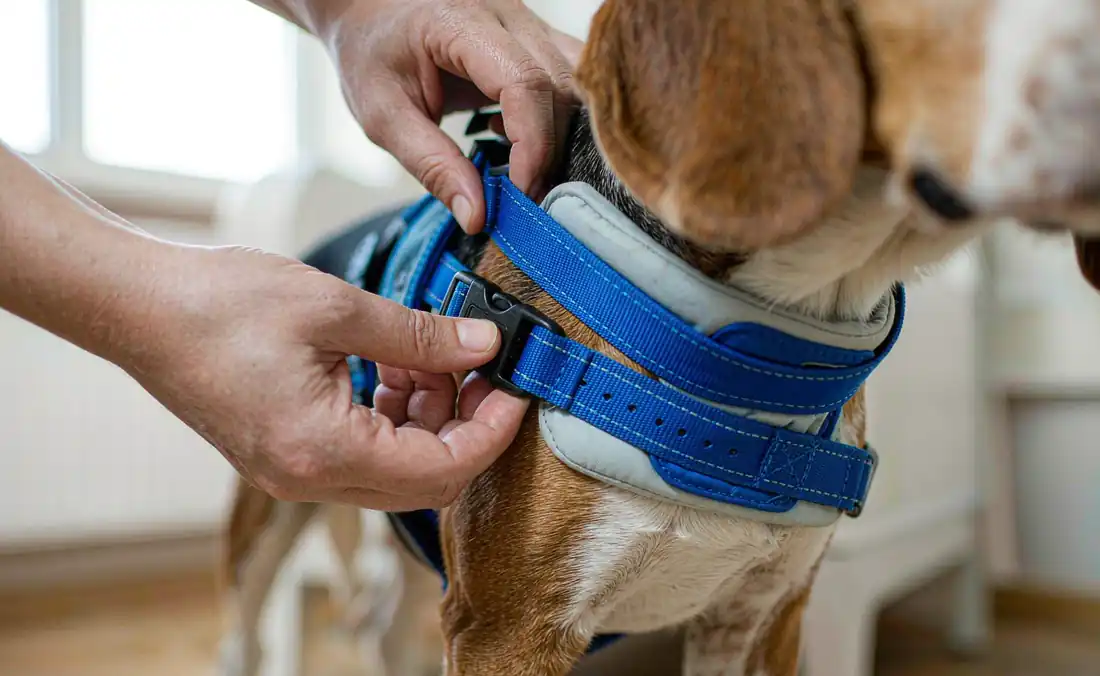
A band is built by fixing three boundaries. The grade step is how much girth (or length) each band adds — 10–15 cm of girth per band is the common range for dog harnesses, chosen so an in-between animal sits comfortably inside one band rather than straddling two.
The tolerance is the manufacturing variance you accept on each dimension, typically ±1–2 cm on cut lengths; the tolerance belongs inside the band, not on top of it, which is why a band labeled 51–66 cm should be cut so the extremes still fit after tolerance. The overlap zone is a deliberate 3–5 cm where two adjacent bands both fit, printed on the chart as guidance (“between bands? choose the larger for winter coats”).
Three rules keep bands honest:
- Never let bands touch without an overlap or a stated rule. A gap of unassigned girth is a returned harness; an overlap with guidance is a fitting choice.
- Anchor every band to the measurement, not to the breed. “Fits a Beagle” is a hint; “girth 51–66 cm” is a specification. The AKC’s breed data helps predict demand, not fit.
- Grade the adjustability with the band. Adjustable straps widen each band’s reach by several centimeters each side; a well-adjusted harness can cover a band nearly twice as wide as a fixed one, which changes how many SKUs the curve needs.
A worked cross-species band table
The table below is the backbone a mixed dog-and-cat store can start from. It is written as girth bands with back-length companions where garments need them, and it assumes adjustable hardware in the harness rows.
| Band | Chest girth | Typical dogs | Chest girth | Typical cats |
|---|---|---|---|---|
| S | 33–43 cm | Toy breeds, puppies | 28–33 cm | Small adults |
| M | 43–56 cm | Beagles, terriers | 33–38 cm | Most adults |
| L | 56–69 cm | Retrievers, boxers | 38–44 cm | Large breeds |
| XL | 69–82 cm | German shepherds, rottweilers | — | Rare |
Read the table as a starting curve, not a finished one: the right move after a season of sales data is to shift the band boundaries, not to add bands. Two systematic deviations break this table’s assumptions and are covered next.
The breed deviations that break the curve
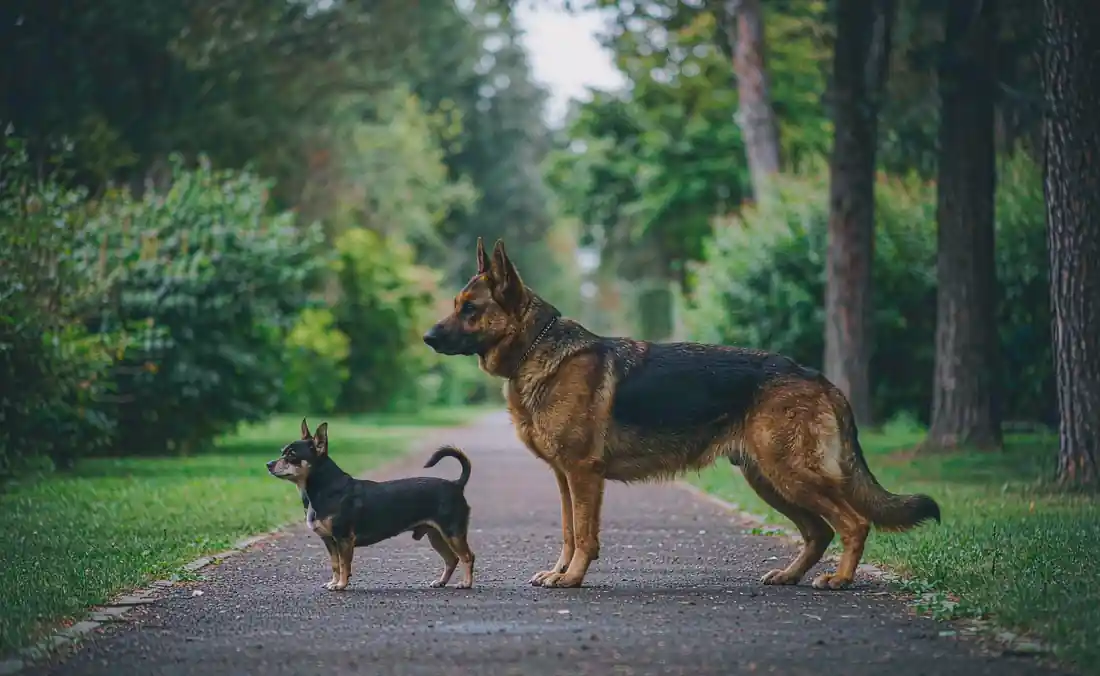
Four body types sit badly in an average-proportion chart, and each has appeared in detail in our breed-specific guides:
- Broad-chested, compact bodies (French Bulldogs and similar): deep ribcage on a short frame means girth and length disagree — the animal measures like a medium and fits like a small in length. The French Bulldog sizing guide covers the Y-front harness cut that resolves it.
- Long-backed, short-legged bodies (Dachshunds): back length is long relative to girth, so length-based garment bands misfit; harness patterns need a longer sternum panel. See the Dachshund harness guide.
- Heavy coats on long torsos (Maine Coons): the coat adds 3–6 cm of apparent girth depending on season, and measurement technique over coat differs from over skin. The Maine Coon guide covers measuring over coat and the garment cuts that follow.
- Hairless bodies (Sphynx): no coat to buffer fit, so fabric seams and tight bands show immediately, and the Sphynx clothing guide explains the close-cut that works.
The wholesale takeaway is not to redesign the curve per breed — it is to know which bands your local customer base will stress, and to stock the curve with those deviations in mind. A store near a French Bulldog-heavy neighborhood needs a different M-band mix than a store near retriever owners, with identical band labels.
Stocking the size curve: how many units per band
With bands set, the curve needs weights. A bell-shaped allocation — fewest at the extremes, most at the center — matches how pet body measurements distribute in practice, with the center of the bell shifted by your customer base. A workable starting allocation for a five-band dog harness program is 10 / 25 / 30 / 25 / 10 across S through XL, adjusted by local breed mix; a cat-heavy store runs the equivalent curve narrower and shallower, because cat bands cover less range.
Three practices keep the curve honest over time:
- Track sell-out by band, not by SKU. A band that sells out mid-season twice is a signal to shift a boundary or raise its allocation; a leftover extreme band is not a reason to cut the whole extreme next season unless it repeats.
- Let the overlap zone absorb the edges. Inventory in the overlap serves two bands, which is why overlap guidance on the chart is also an inventory tool — it delays the stockout of the band that is about to run dry.
- Reorder on the curve, not on totals. Reordering “more harnesses” without band weights rebuilds the flat chart distribution that failed the first time. The reorder sheet should carry the same band columns as the plan.
Seasonality moves the curve as well as the customer base does. Winter garment ranges pull demand toward the larger bands as coats add apparent bulk and buyers size up deliberately; summer harness ranges pull demand back toward the center as fit tightens. A curve tuned on winter data will underweight the center come summer, so the allocation table is worth revisiting each season rather than freezing after the first order.
Suppliers matter here as much as the plan: a factory that can ship mixed bands in one batch at low minimums lets you run a genuine curve, while one that forces flat quantities per SKU forces you back toward the chart-shaped mistake. Mixed-batch support across sizes is a standard part of how we ship — the terms section below states it explicitly.
The practical test of a supplier is simple: ask whether a single carton can carry 40 units of M, 30 of L and 10 of S in two colors, and whether the price changes compared with flat quantities. The answer tells you whether the factory’s production batch can follow your curve or only its own convenience.
Our terms versus industry practice
Industry practice is that suppliers quote per SKU with minimums per item, which quietly pushes buyers toward flat, chart-shaped assortments. Our own terms at Cuteye are built around curves: we support low and flexible minimums per item, mixed batches across sizes and colors in one shipment, stock items that ship in 3–7 days, and custom OEM and ODM runs at 7–30 days after sample approval.
We grade patterns from your measurements — send the band table and we will quote the split, including the tolerance positions inside each band. For the measurement standards behind this table, the AKC breed profiles and International Cat Care are the two references we build from when customers do not supply their own charts.
If you are starting a program rather than restocking one, the OEM versus ODM guide sets out who owns the pattern at each level of customization, and the wholesale pet supplies hub lists the product categories the curve would cover.
Frequently asked questions
What is a size curve in pet products?
It is the full plan of measurement bands for a product line plus the planned quantity per band. A chart tells one customer which SKU to buy; a curve tells the buyer how many of each SKU to stock, weighted to the real distribution of pet measurements in their market.
Should I measure girth or weight first?
Measure girth. Weight is a useful secondary column because customers can always get it, but two pets of the same weight can differ by 15 cm of chest girth depending on build, so weight as the primary selector is the fastest route to a return.
How much overlap should there be between bands?
A deliberate 3–5 cm where two adjacent bands both fit, with printed guidance on which band to prefer in the overlap (usually the larger one for garments and winter coats). Overlap converts a fitting problem into a fitting choice, and it doubles as inventory flexibility.
Why do my medium bands always sell out first?
Because pet body measurements skew toward the middle and a flat allocation underweights the center. Shift allocation toward the center bands, verify the M band boundaries against your local breed mix, and track sell-outs by band so the next order follows demand rather than habit.
Do cats and dogs need separate curves?
The measurements are the same, but the bands are not: cat ranges are narrower, skew smaller, and often ship three bands where dog ranges ship five or six. One measurement protocol serves both species; one band table does not.
How do I convert an existing size chart into a curve?
Start from the sales and return history you already have. Map every sale to the band it came from and every return to the band boundary it straddled, then shift boundaries into the return cluster and move allocation toward the bands that sold out. The first conversion usually reveals that two bands were carrying demand that belonged to a third — the data fixes the chart faster than any redesign session.
Related reading
buckle fatigue and tensile testing, the French Bulldog sizing guide, the Dachshund harness guide, the Maine Coon guide, the Sphynx clothing guide and the wholesale pet supplies hub
The curve, maintained
A size curve is never finished; it is a plan that one season of band-level sales data corrects. Set the bands from measurements, weight them to the customer base, print the overlaps, and let the reorder sheet carry the same columns as the plan. Stores that run curves reorder with confidence; stores that run charts reorder on hope.
Send us your band table — or ask for ours as a starting template — and we will quote the assortment split with mixed sizes in one batch, so the curve you planned is the carton that arrives.