
Paw protection is the quiet category that sells all year: in summer the hazards are hot pavement and abrasive trail surfaces, in winter they are ice, salt and chemical de-icers, and in between there are cracked pads, burrs and raw toe skin that no dog enjoys. For pet brands and retailers, that means the accessories built around paw protection — boots, balms, socks — are among the few SKUs with genuine twelve-month demand rather than a single seasonal spike.
This guide explains how a paw actually fails, the five layers of paw protection worth merchandising, when boots beat balm and when they do not, how customers train a reluctant dog to accept footwear, and the seven specification points to confirm before you stock a range.
Why pads fail — and why the failure is seasonal
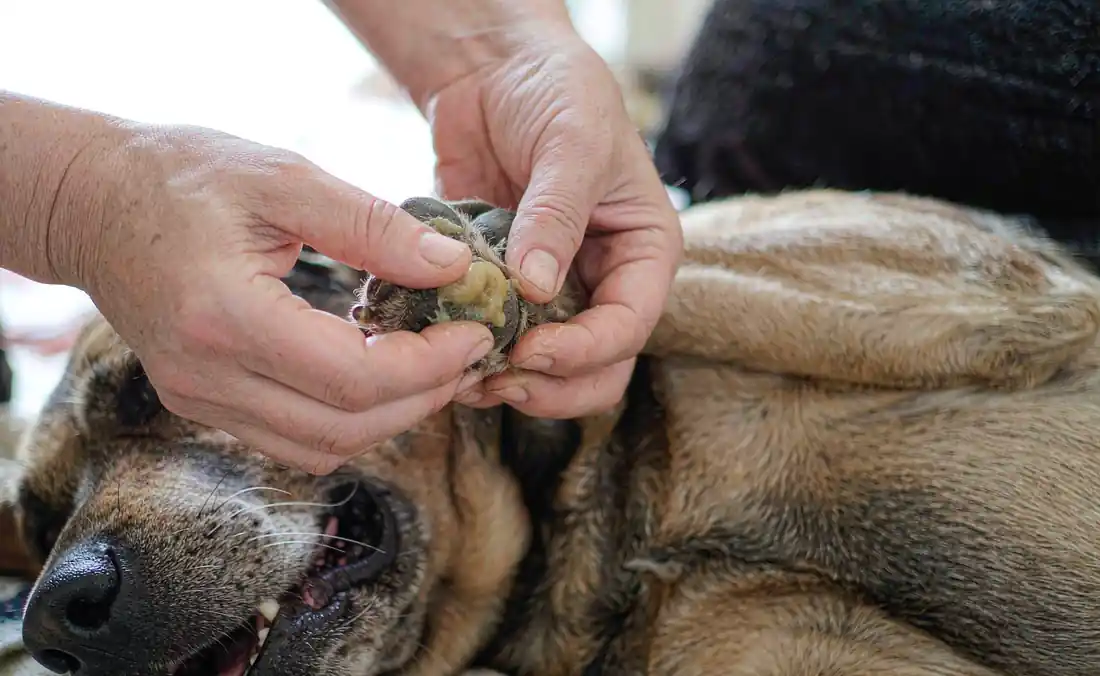
A dog’s pad looks tough and is tougher than most skin, but it is not armor. The surface is thick keratinized epithelium over a fat pad, built for abrasion rather than extremes. Three failure modes matter commercially, and each one maps to a season your buyers already plan around.
Heat. Asphalt absorbs and radiates: on a day where air temperature feels merely warm, pavement can scald, and the standard field check is the seven-second rule — if you cannot hold the back of your hand on the surface comfortably for seven seconds, it is too hot for the animal. Burns on a paw limit mobility, affect playtime and invite secondary infection, which is exactly how the American Kennel Club frames the stakes: even a minor blister from a hot sidewalk becomes a health problem, and a burned paw takes weeks of healing during which every walk re-tests the wound.
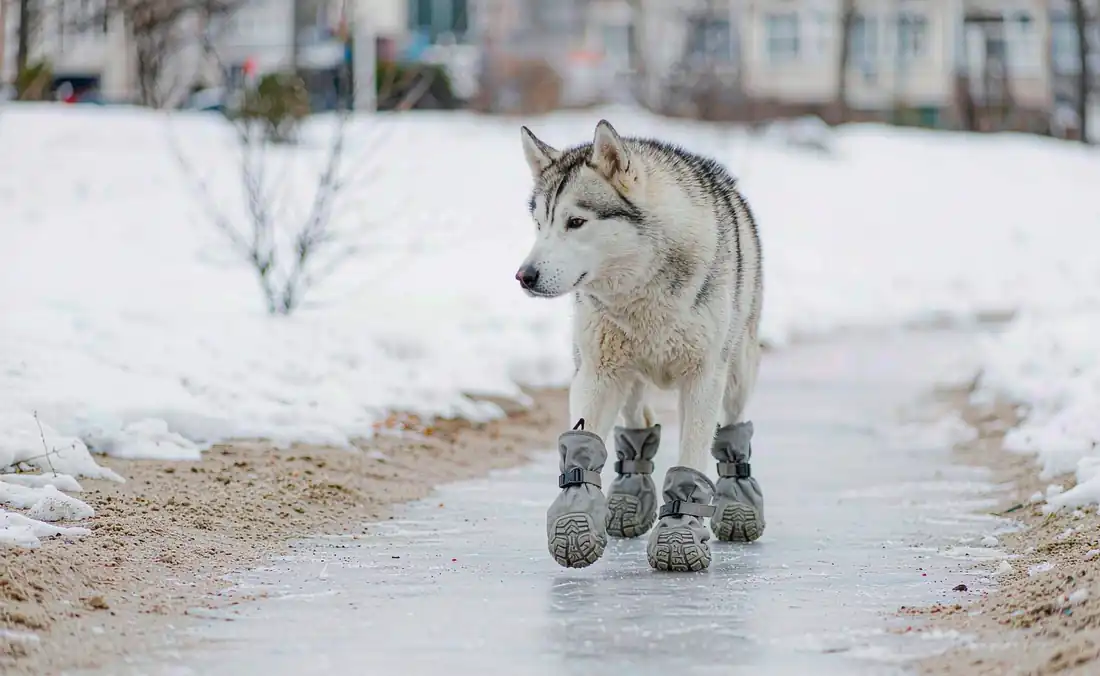
Cold and chemistry. Ice itself abrades; the real winter hazard is chemical. De-icing salts — sodium chloride, calcium chloride, magnesium chloride — cause chemical burns between the pads, and the AKC’s winter safety guidance flags the second exposure path: the pet licks its feet afterward and ingests the residue, with drooling, vomiting and diarrhea as the documented outcomes. Frostbite reaches pads and toes first because circulation there is limited, and the AKC notes the risk begins once temperatures drop below 32 degrees Fahrenheit.
Abrasion and moisture. Sharp gravel, broken glass and rough terrain tear pads; weeks of wet ground soften them and open the skin between the toes to yeast and bacterial infection. VCA Animal Hospitals’ first aid guidance treats a torn pad as a veterinary case precisely because the wound sits where every step re-opens it.
That hazard list is also the demand forecast: hot-surface searches peak in summer, salt-and-ice searches peak with the first freeze, and paw protection queries run steadily across both — which is why the layer system below is built to merchandise twelve months a year rather than in one seasonal window.

The five layers of paw protection that actually work
No single product covers every hazard, which is why the strongest merchandising story is a layered one — and why ranges built as a system outsell single-SKU attempts.
- Timing and route choice. The cheapest protection is free: walk early or late on hot days, choose grass over sidewalk, and skip salted routes during thaw. Retail copy that opens with this reads as fluency, and it positions the product as completing the plan rather than replacing judgment.
- Grooming. Fur between the toes collects ice balls in winter and burrs in summer — trim it even with the foot surface. Nails left long change gait, stress the toes and split on rough ground. Neither costs the customer anything, and both belong on your packaging card as step one of paw protection.
- Balm and wax. A quality wax-based balm creates a breathable barrier that prevents snow build-up and keeps dry, cracked pads moisturized. It is the right tool for short cold-weather walks with no ice or salt, for summer dryness, and for customers whose pets refuse footwear — every serious paw protection range carries one.
- Boots. The most complete barrier there is, and the product with the most specification risk. The next sections cover fit and acceptance in detail, because boots fail in predictable, preventable ways.
- Post-walk rinse and inspection. Wipe or dunk the feet after winter walks to remove salt and chemical residue; check between the toes after trail walks for burrs and grass awns, whose barbed seeds can burrow deep enough to need surgical removal. A brand that prints the routine is protecting the product’s reputation as much as the customer’s pet.
Boots: the fit rules that decide returns
Boots provide the best protection and generate the most returns when fitted badly, so the specification matters as much as the marketing. The AKC’s fitting method is the industry baseline and worth reproducing on your own packaging: press the pet’s foot onto a sheet of paper while it stands, so the pad splays the way it does when walking, trace the impression, and measure the widest point — width, not length, is the primary sizing metric. Front and rear pads often differ, so all four feet are measured separately.
Beyond sizing, five construction details separate a boot that stays on from one that ends up in a return envelope:
- Two adjustment points. A single strap twists and slips; closures that combine a lower strap with an upper cuff hold the boot at the narrowest part of the leg through a full stride.
- Sole with real tread. Multi-directional lugs grip wet pavement and rock; thin smooth rubber soles give little traction on the ice they were bought for. Tread depth is visible to the customer before the first walk — make it deep enough to demonstrate.
- Breathability matched to season. Rubber boots excel against slush and salt but trap moisture on long summer wear; dogs also release heat through their foot surfaces, so summer designs favor mesh and ventilated uppers. Packing a winter-only boot into a summer listing is a heat-stress complaint waiting to happen.
- Dewclaw accommodation. The dewclaw sits exactly where boot rims rub. Higher cuffs, softer rim materials, and packaging that mentions dewclaw care are the difference between a sore leg and a five-star review.
- Washability. Linings that cannot be machine washed develop bacterial and fungal growth within weeks of regular use. Washability is a hygiene claim, not a convenience claim — print it as one.
Getting a dog to accept boots — the training customers skip
Most boots are returned not for fit but for refusal: the pet high-steps, freezes, and shakes the footwear off within a minute. That behavior is normal, predictable and fixable — and the AKC’s acclimation method converts it into packaging copy that genuinely reduces returns.
The sequence: let the pet sniff and investigate the boots while treats build a positive association; fit one boot at a time rather than four at once; practice indoors for short periods and extend the duration across sessions; and only then head outside. The famous high-stepping gait is not rejection — it is the pet adjusting its proprioception to a new surface, and it fades with repetition. Customers who skip the sequence and march outside on day one meet a pet that shakes all four boots off in the driveway, and the product takes the blame for the training gap.
For B2B buyers the commercial translation is direct: a hang tag or insert card that walks the customer through this sequence costs cents and measurably protects your reviews. We print it on our own boot packaging for exactly that reason — a returned pair is a lost repeat purchase, and the training gap is the largest controllable cause of returns in the category.
Boots or balm: the decision table your buyers need
Customers ask one question — “which do I need?” — and the honest answer depends on conditions, not on season alone. A decision table earns its place on your packaging and your listing, because it turns paw protection from a product pitch into a plan the customer can follow.
| Condition on the ground | Best protection | Why |
|---|---|---|
| Hot pavement, sand, trail rock | Boots with ventilated uppers | A barrier against surface heat; limit long wear because the feet also release heat |
| Dry cold, no salt or ice | Balm, or nothing | Coated pads handle short walks; moisture matters more than insulation |
| Salted sidewalks, thaw and slush | Boots, plus a rinse at home | Chemical burns and licked residue are the twin hazards; boots block contact |
| Ice and refrozen snow | Treaded boots, or a shorter walk | Smooth soles lose grip exactly when the ground is worst |
| Deep snow, long outings | Insulated boots | Snowballs in toe fur and cold injury both scale with time out |
| A dog that refuses all footwear | Balm plus route choice plus rinse | Forced footwear stresses the animal; the layered fallback still covers most risk |
The table also shows why the range strategy is the right one: no single SKU answers every row, and buyers who stock boots alongside a balm — with the rinse routine printed on both — capture the whole table instead of one column of it.
Common mistakes in paw protection — and the copy that prevents them
Walk through enough returns and reviews and the same mistakes repeat, which makes them ideal material for the education section of any paw protection listing.
Sizing by length instead of width. The most common fit error: customers measure heel to toe and buy a boot that slides sideways off a splayed paw. The paper-trace width method belongs on every card, front and rear measured separately.
One boot sold as all-season. A sealed rubber boot worn through summer traps moisture and traps heat — dogs release some body heat through their feet — while a ventilated summer mesh worn into slush soaks through in minutes. Seasonal honesty is a specification, not a marketing choice.
Boots forced on a refusing animal. Never force footwear on a pet that panics or repeatedly shakes it off; the layered fallback — balm, route choice, rinse — covers most of the risk without the stress. Packaging that says so earns trust that converts across the rest of the range.
Skipping the post-walk routine. Protection does not end when the walk does: salt residue sits between the toes until it is rinsed off, and a licked paw carries the chemistry inside. Five seconds at the door finishes the job the boot started.
Each of these fits in one line on a hang tag, and together they are the difference between a category that reads as expertise and one that reads as inventory.
Seasonal hazards your packaging should name
Season-by-season hazards give your listings year-round relevance instead of one winter spike.
Summer — hot surfaces first, then trail abrasion, then the invasive seeds whose barbed heads puncture skin around the pads and, if missed, burrow deep enough to require surgical removal. Check between the toes after every walk.
Winter — salt and de-icer burns, licked chemical residue, ice balls compacting in toe fur, and frostbite risk below freezing for the toes and pads first.
Spring — persistent moisture softens the tough surface and opens the skin between the toes to yeast and bacterial infection; towel-dry the feet after wet walks and resist over-bathing, which strips natural oils.
Fall — fluctuating temperatures dry and crack the surface; balm season starts before the first frost, and freshly exposed trail debris after thaw does hidden damage.
A listing calendar built on these four rows keeps the category in search results and on the shelf twelve months a year — which is the commercial argument for stocking it at all.
Sourcing checklist: 7 things to confirm before stocking boots
Everything above collapses into seven questions that separate a sellable range from a returns problem. Walk through them with any prospective supplier — and note which ones a serious supplier answers before you ask.
- Sizing system. Width-based charts with front and rear variants, graded across the full range from toy to giant breeds, with the paper-trace method printed on the card. An “S/M/L” chart with no measurements is a returns generator.
- Closure construction. Two independent adjustment points per boot, tested on real walks — not on a mannequin. Ask what percentage of testers reported the boot staying on through an hour of mixed terrain.
- Sole material and tread. Rubber or TPR compound with visible multi-directional lugs, hardness tuned for grip rather than looks; ask for the wear pattern after durability testing.
- Seasonal correctness. Ventilated uppers for warm-weather designs, sealed and insulated builds for winter — never one boot sold as both, because the heat-stress and moisture complaints arrive from opposite directions.
- Material and hardware safety. Strap materials free of sharp edges after flexing, buckles that survive repeated adjustment, and no small detachable parts a chewer could swallow. Supervised-use guidance belongs on the card: footwear is not for unattended wear.
- Balm companion SKU. A wax-based balm from the same range, with the ingredient list and intended conditions printed plainly — it covers the refusal segment and doubles the basket size.
- Quantity split and mixed batches. Sizes and seasonal variants mixed across one order, low minimums per size, stock items shipping in 3–7 days and custom colors at 7–30 days after sample approval. Our own terms are built around that split — send the size curve and we will quote the mix, the same way we grade it for our harness range.
Paw protection rewards ranges built as a system: the boot answers the extreme rows of the hazard table, the balm answers the daily ones, and the printed routine answers the rest. Buyers who spec all three from one supplier get a category story that holds up all year — and a customer base that comes back when the season turns.
Frequently asked questions
Do dogs really need boots?
For the conditions that justify them, yes: salted and chemically treated sidewalks, ice, genuinely hot pavement, and abrasive terrain all injure pads that no amount of toughness protects. For mild conditions and short walks on safe ground, grooming, route choice and balm cover the risk without footwear. The need is conditional, not universal — which is exactly how honest packaging should present it.
How do I know if the pavement is too hot?
Use the seven-second test: press the back of your hand against the surface and hold it there. If you cannot keep it there comfortably for seven seconds, the surface will burn a paw. On those days walk early or late, use grass routes, or fit ventilated boots — and remember the pet releases heat through its feet, so boots in summer are for hazardous surfaces, not all-day wear.
What size boot does my dog need?
Measure width, not length: press the foot onto paper while the pet is standing so the pad splays as it does when walking, trace it, and measure the widest point. Measure all four feet, because front and rear pads often differ by a size. Between sizes, size up and take up the slack with the strap rather than squeezing a smaller boot on.
How long does it take a dog to get used to boots?
Most pets adjust within a week of short, positive sessions: sniffing first, one boot at a time, indoors before outdoors, with treats throughout. The high-stepping walk on day one is normal adjustment, not refusal. Customers who skip the sequence usually blame the product — print the sequence on your packaging and the returns rate drops.
Is paw balm a real alternative to boots?
For short walks in dry cold, summer dryness and crack maintenance, yes — a wax-based balm creates a breathable barrier and moisturizes the surface. It does not insulate and it wears off, so on salted or icy ground it is a supplement to footwear and rinsing, not a replacement. Stock both and let the conditions table decide.
What should I do about a torn paw?
Treat it as a veterinary case. The wound sits where every step reopens it, and VCA Animal Hospitals’ first aid guidance describes cleaning, covering and professional assessment as the sequence — not waiting to see if it heals. A limp, a visible flap or bleeding that recurs after a walk all warrant the clinic visit.

Related reading
the Dachshund harness sizing guide, the Maine Coon sizing guide, the RFQ guide and the dog harness range